How to Install Third-Party SSL Certificates in CentOS Server?
Step1. Download the SSL certificate file from your third-party SSL provider. Copy your SSL certificate files to your Apache server using WinSCP from your PC.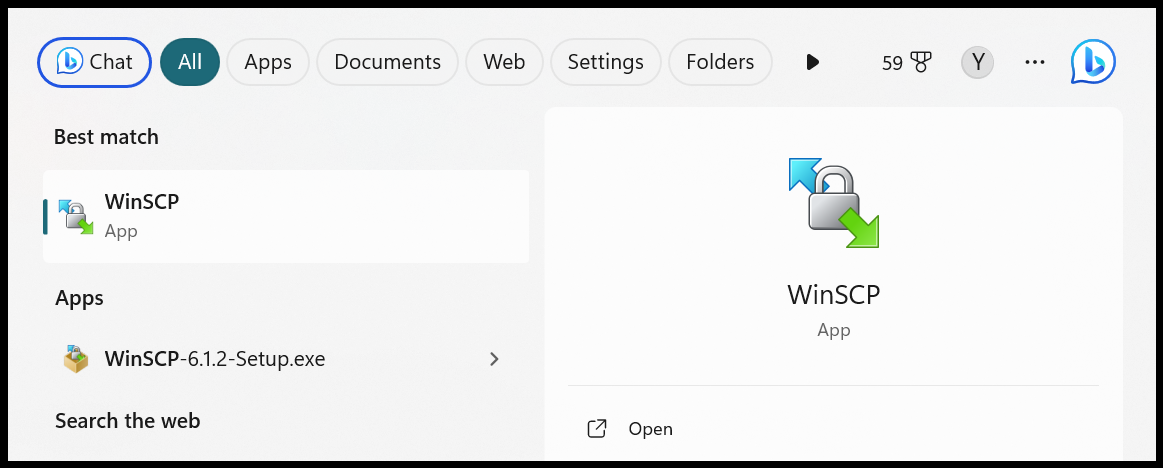
Hostname: Server_IP
Username: root
Password: ****** 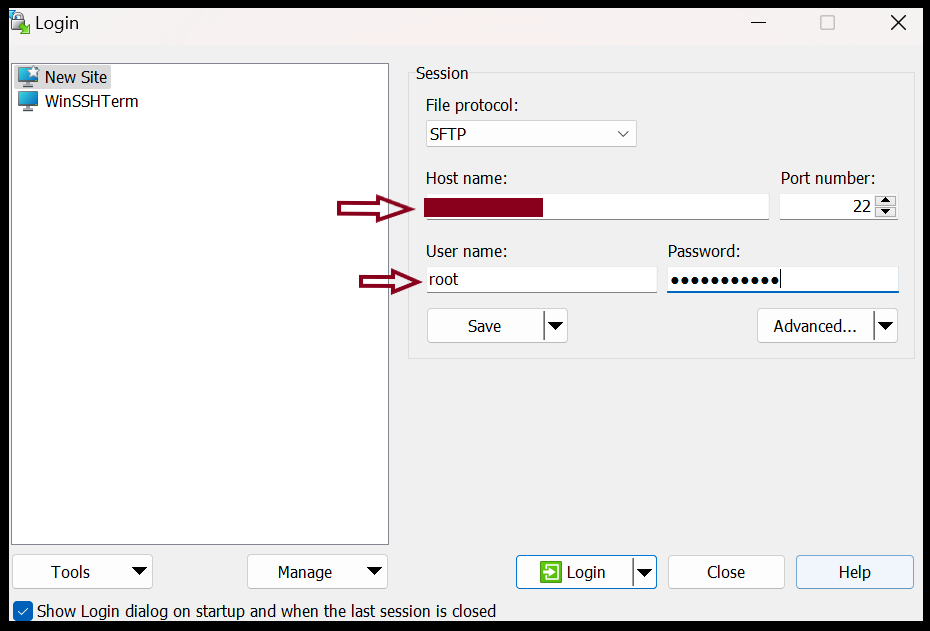
Step2. If we connect with WinSCP, copy the certificate file (the primary and intermediate certificate) and upload it to the remote server.
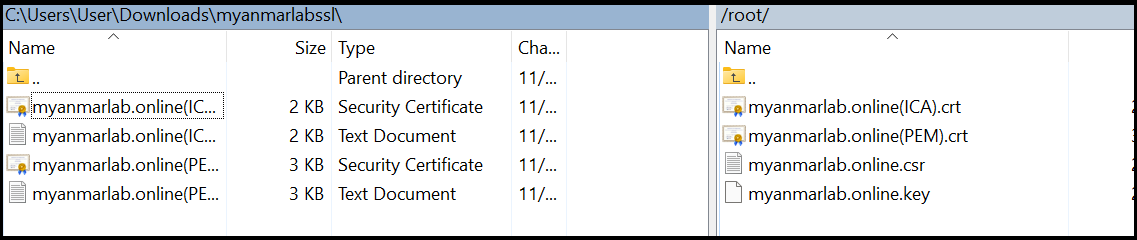
Step3. Find httpd.conf or ssl.conf file presented in the Apache configuration. If you do not find the file, you will need to ensure that the Apache mod_ssl module is installed on your system.
root@ayechan:~# yum install mod_ssl

To Edit the files please use the following command.
root@ayechan:~# cp /etc/httpd/conf.d/ssl.conf /etc/httpd/conf.d/ssl.conf.Bak
root@ayechan:~# vim /etc/httpd/conf.d/ssl.conf

SSLCertificateFile /etc/httpd/conf/myanmarlab.online_PEM.crt
SSLCertificateKeyFile /etc/httpd/conf/myanmarlab.online.key
SSLCertificateChainFile /etc/httpd/conf/myanmarlab.online_ICA.crt
Now save your configuration file and test the apache SSL config. Then restart the apache.
root@ayechan:~# apachectl configtest (or)
root@ayechan:~# apachectl -t
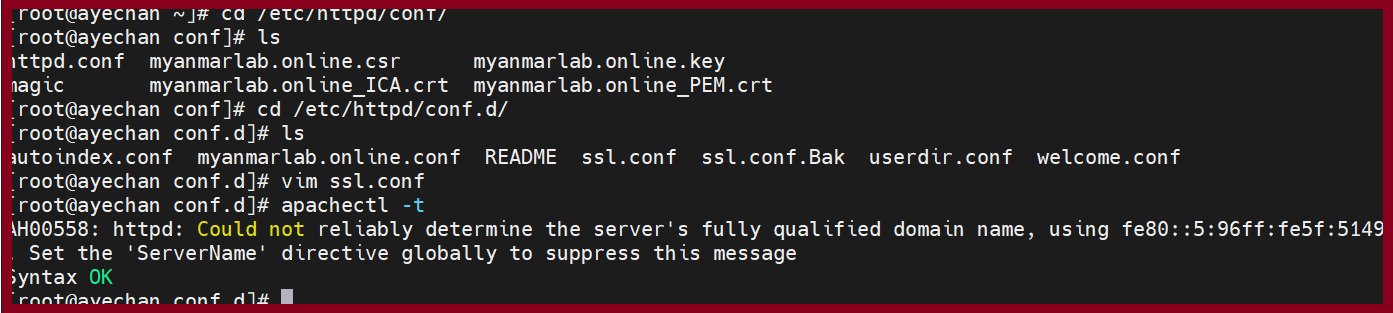
Step4. Please open 443 port in firewall to connection with HTTPS.
root@ayechan:~# firewall-cmd –zone=public –add-port=443/tcp –permanent

root@ayechan:~#firewall-cmd –reload

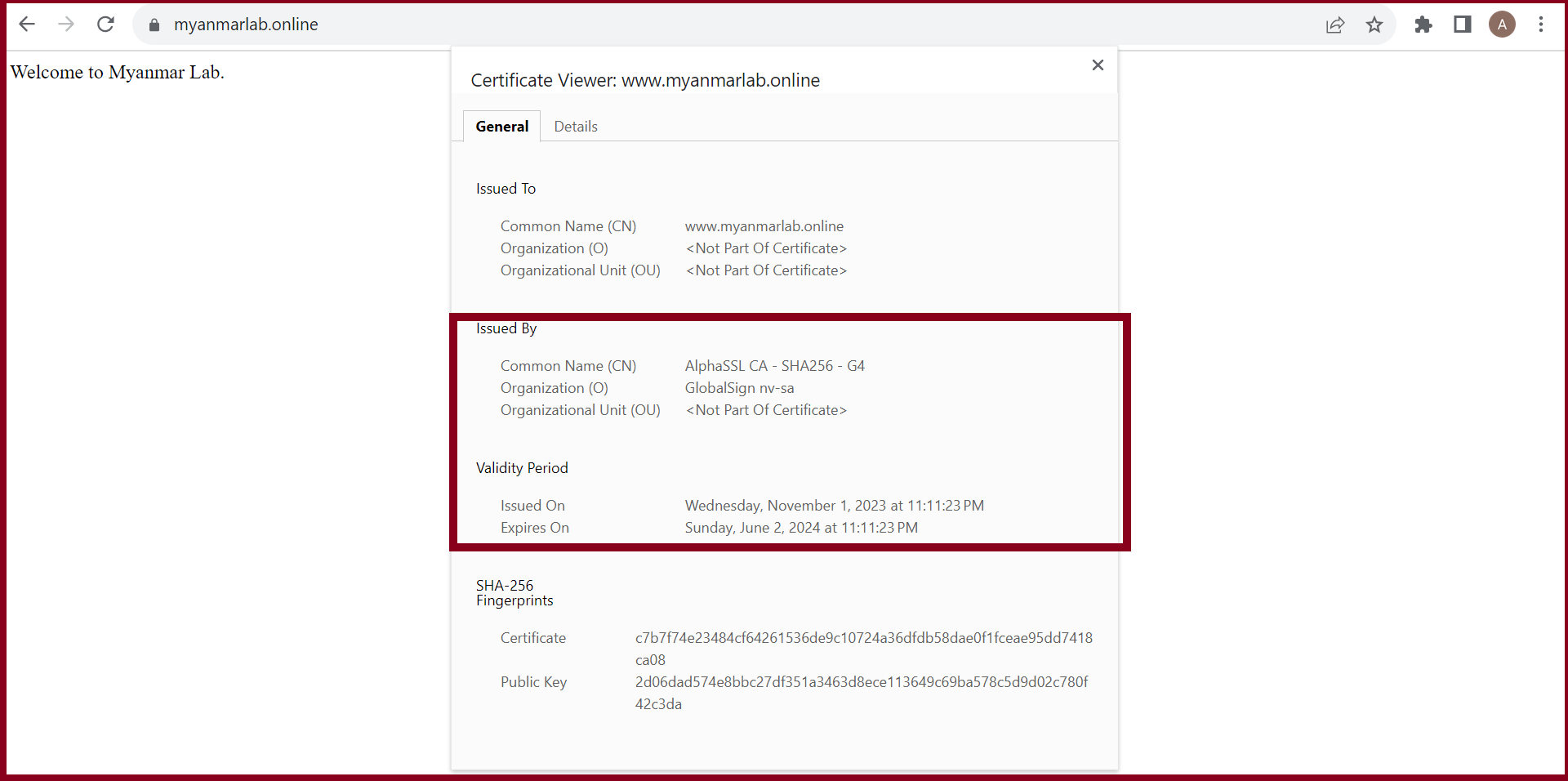
Step5. Please check again your website with https from the browser.
https://myanmarlab.online (sample)
THANK YOU!!!
Was this article helpful?
That’s Great!
Thank you for your feedback
Sorry! We couldn't be helpful
Thank you for your feedback
Feedback sent
We appreciate your effort and will try to fix the article